Why the artificial superintelligence alignment problem may be a domestication problem: not whether ASI hates us, but whether it can make us smaller, safer, and easier to keep.
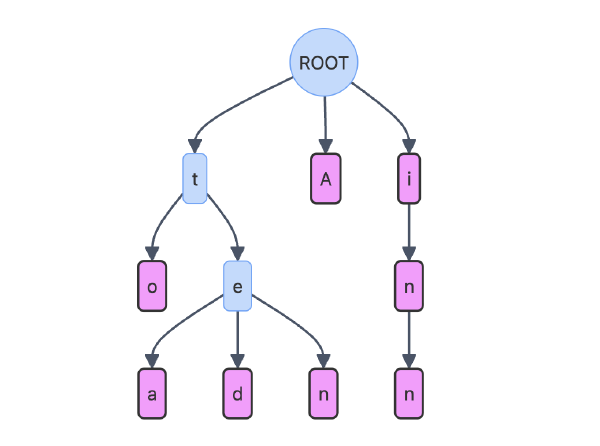
A rigorous analysis of Prefix Trees (Tries) and Radix Trees, evolving from memory hierarchy constraints to cryptographically secure Data-Oblivious architectures.
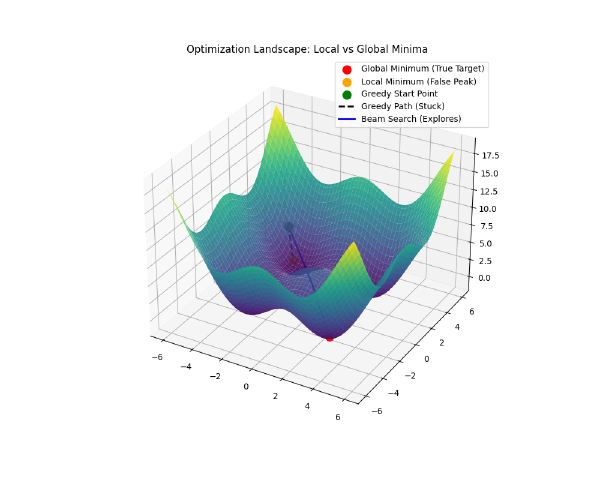
A comprehensive deep dive into the mathematical foundations and algorithms of modern vector search, including HNSW, DiskANN, Quantization, and the Curse of Dimensionality.
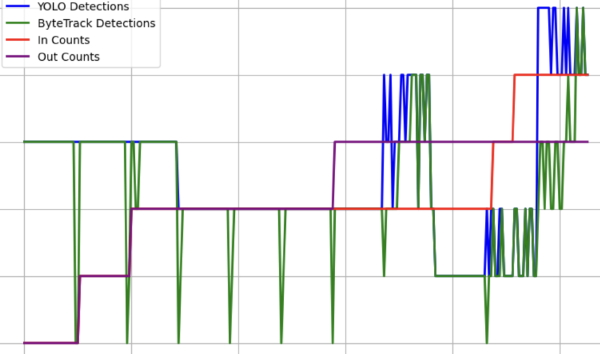
Dealing with low fps video can make re-identification of individuals between frames more difficult as the potential targets tend to “jump” between frames in a way that throws off trackers. Here, I show how applying a Gaussian jitter or wiggle to artificially increase the fps of the video can improve tracking.
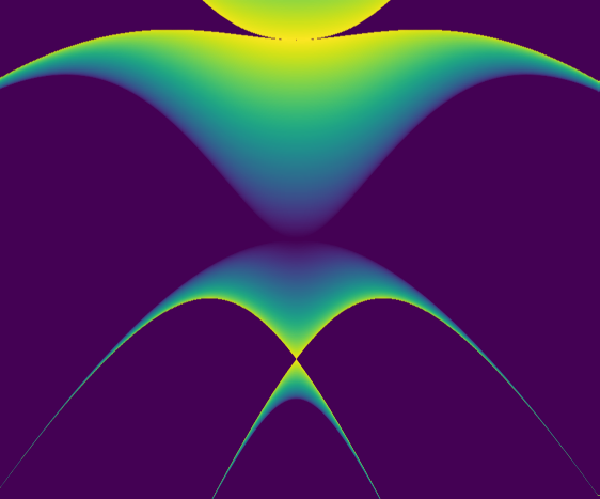
Of great use to physics, including one of the promising paths towards quantum computers, is the ion trap. Though there are various models in use, we focus here on Paul-style models. To do so, we need to understand Mathieu’s equations and their corresponding solutions in enough detail to grasp the function of the Paul ion trap. In this report, we explore the behavior of Mathieu’s equation and its solutions for the Paul ion trap.
In this first part in a multipart series, we build a little model LLM that can construct basic phrases and display the effects of temperature. This first version doesn’t use neural networks but does demonstrate some fundamentals of LLM terminology.
A look at how Bayesian statistics can help us understand ways to make decisions (in the context of COVID-19 rapid test accuracy). This post will introduce concepts related to Bayesian statistics, but may still be interesting to individuals already familiar with the topic.
Using the krpc library, we can automate a rocket simulator, turnking Kerbal space program into a more powerful educational tool. In this post, we automate the launching and circularization of the Kerbal equivalent of the Apollo rocket.